The pursuit of healthful and natural ways to diaper my child, led me to the idea of exploring similar options for myself during menstrual cycles. Afterall, disposable menstrual pads can also contain various chemicals and accumulate in landfills.
After some researching and trial and error, I found some cloth pads on Amazon and a system to wash and maintain them in a way that is easy and fairly feasible for me even with a toddler and a job.
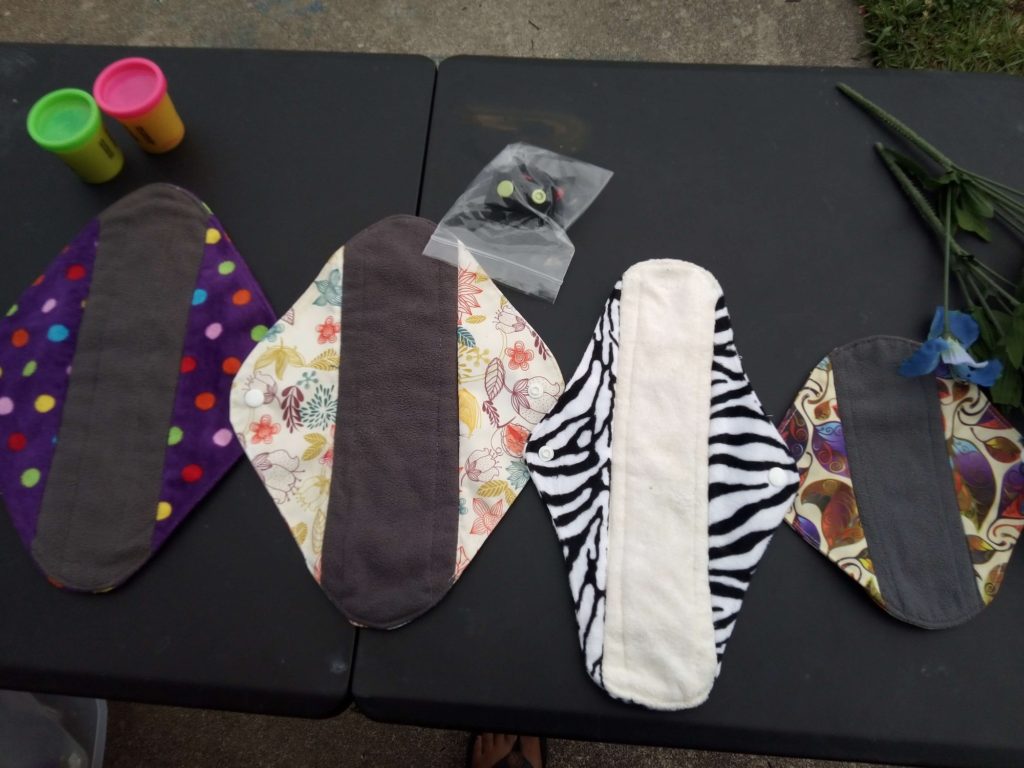
My most favorite cloth pads for a regular day of bleeding is from the company ‘Heartfelt‘.
I found that charcoal pads can feel too warm or itchy and uncomfortable if the bleeding is not high, like on the first day or spotting etc. Charcoal pads seem the most comfortable on days where is medium to heavy bleeding.
For overnight and heavy bleeding days, I use an extra long charcoal pad from the company ‘HiBaby’ and also Heartfelt.
Once again, these charcoal pads are very comfortable and best-suited for days of heavy flow and overnight use. I still change these pads atleast once overnight.
With any menstrual pad, the key is to change the pad when it starts to feel wet. With charcoal pads, it is harder to see the wetness because of the color of the charcoal. I have found charcoal pads to be wonderfully absorbent. So at the first sign of wetness, I assume that the pad is sufficiently soaked and change them.
For the days of lower bleeding, I use the pads from the company ‘Love My Antibacterial Bamboo‘ pads. These pads are very soft and comfortable. However, they don’t seem to absorb too much fluid. These are best suited for the last few days of a period where this is a much lighter flow. On such days, a charcoal pad could feel itchy and dry. These pads feel very comfortable on those days.
I recently also discovered some soft liners that can be used for the last few days of spotting after a period. I found them also on Amazon, here.
These pads from the company Heartfelt, also have some good liners for the last few days of light flow.
Despite using the pads, sometimes, one needs an additional layer of protection to prevent leaks. One of the ways to prevent leakages is to wear period-panties. The ones I have used and have worked for me very well are from the company: Yoyi
One can also find some additional buttons to use to secure the pads to the unedrwear. I found some good ones at ‘Party in my pants’
I also use the Perineal washing bottle
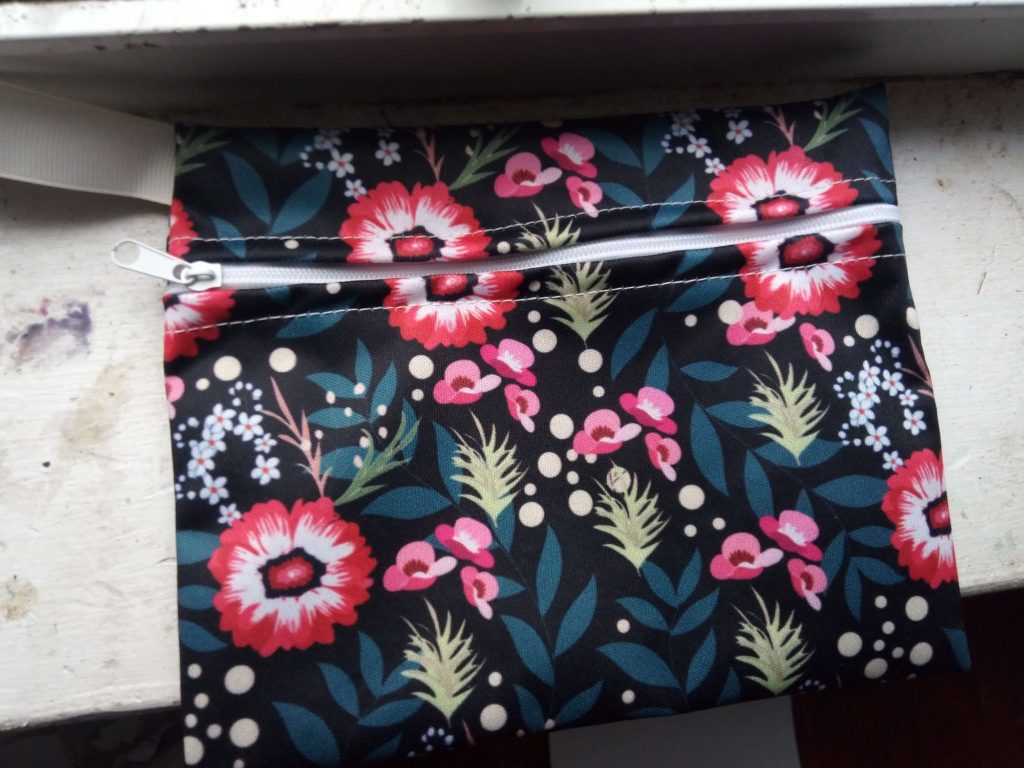
While outside the house, I can just fold and place a used cloth pad in a colorful and waterproof carrying pouch
Maintenance of cloth pads:
The main advantage in my opinion, of using disposable pads is the ease and convenience of just dropping a used pad and getting a fresh new one…With a simple system, I have been able to get a similar convenience with my cloth pads.
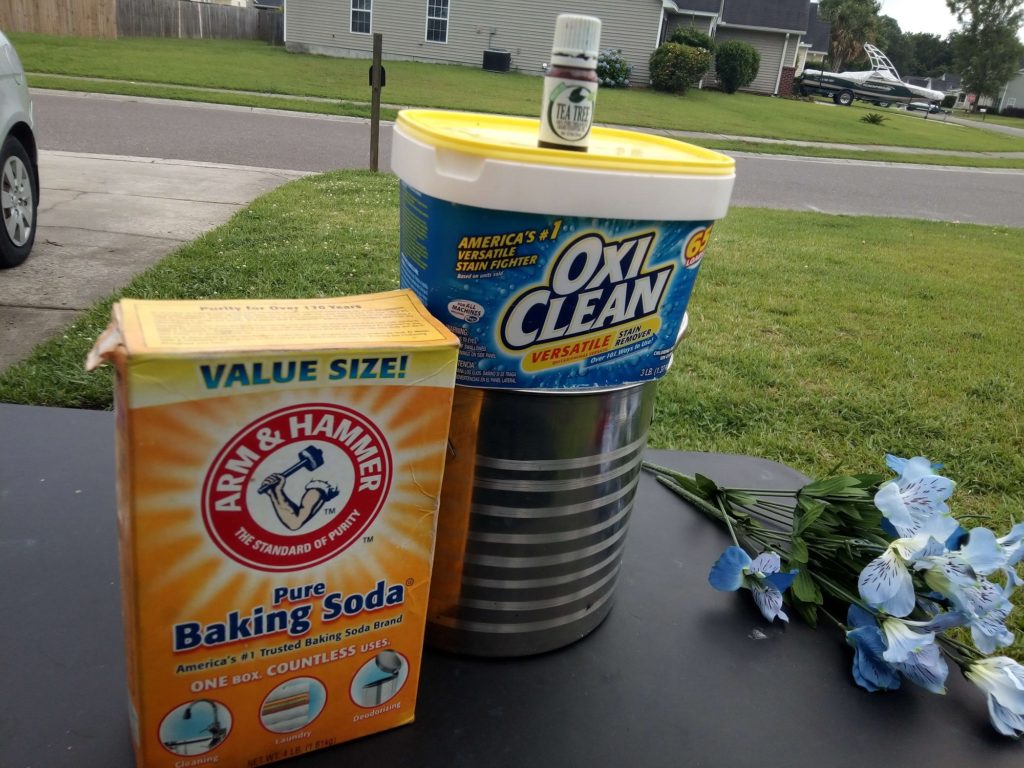
I have two stainless steel containers (bought for a few bucks at a local store), in which I add warm water, oxyclean, baking soda and a few drops of Tea Tree Oil. I just put my used pads in this mixture to soak. Usually, I soak the heavily absorbant pads in one container and a lightly soiled pad in another container, with a similar mixture. It is important to change the water every 8 hours atleast. The menstrual blood comes out of the pads into the water and so it must be carefully poured out into the toilet using gloves. By the time one has changed the water/oxyclean mixture 2-3 times, most of the menstrual blood comes out of the pads. Then one can just wash the pads with some bar detergent. I use RIN bar detergent to gently wash the pads. Any clothes detergent should workf or this purpose.
I don’t put any of my menstrual pads in the laundry because I consider that to be very unhygienic. Laundry machines have a tendency to accumulate germs and I would not want to put my menstrual pads in the same machine where the rest of my family’s laundry also goes in.
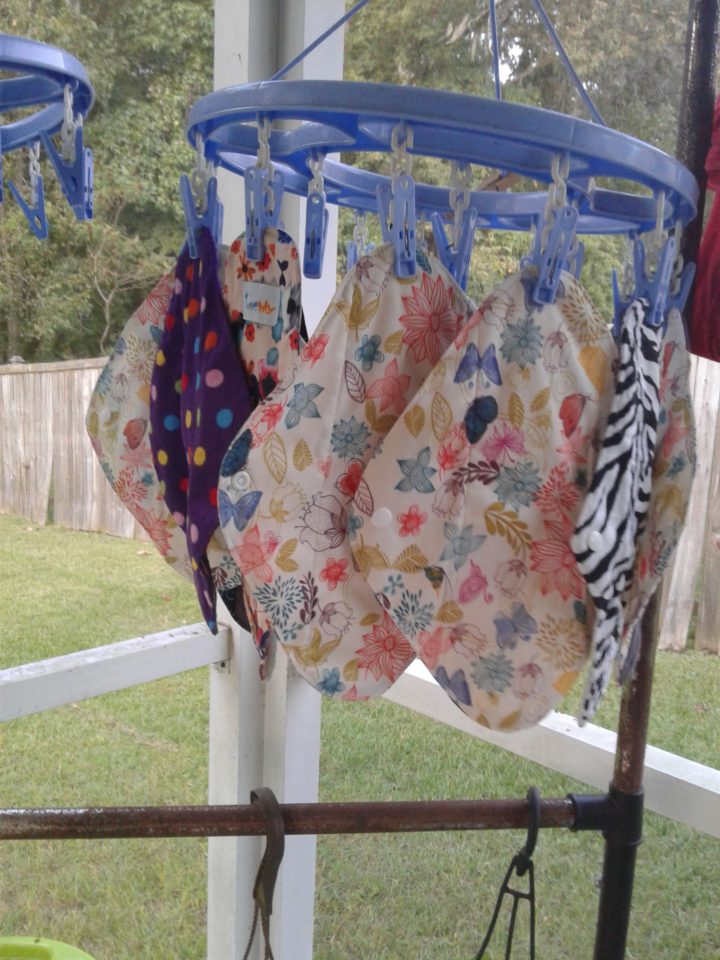
Once I wash the pads, I just hang them out to dry. Any regular clothes-handing line could work. I try not to expose the pads to direct sun, but do let them dry outside for a few days.
I resoak all my washed pads into the steel container, but now with just some water and vinegar. This makes the pads get an additional level of disinfection as well as making them soft for the next use. I soak the pads overnight and just rinse them out with water and dry them again, before finally putting my nice, clean, dry pads in my pads container in the bathroom for their next use.
Sometimes, I don’t have enough space in my steel container to soak all the pads. During that time, I store my pads in a small trash can, meant specifically for my pads (no trash goes in it!). I use a waterproof liner in the can.
I also soak my period panties in the steel containers with the water/oxyclean/baking soda/Tea tree Oil mixture. After perhaps one change of water, all the stains of blood come out and I just use a bar detergent too handwash the period panty and dry them outside.
Once the panties have been washed and dried, I may occasionally put them in the laundry with my regular wash, since the only get a few stains and don’t soak a lot of blood.
One important contraption I use to keep my pads in place in my panties is : Fabric Velcro This is really an inexpensive but very useful product that keeps my pads in place and prevent leakages.
It might seem like a lot of financial investment to set up the cloth pads. However, I have not wanted to go back to purchasing any disposable pads since the December of 2017. The investment of my pads, cheap stainless steel containers to soak them in, baking soda, oxyclean and other materials has given me many rewards.
I am not sure if it is a psychological effect or a physiological effect. But it sure does feel like my periods are a lot of comfortable and even sometimes pleasant due to the cloth pads.
After discovering cloth menstrual pads, I feel like I have found a better alternative to disposable pads for my monthly cycles.
I hope you find this article useful and if you do, please send in your comments and suggestions.